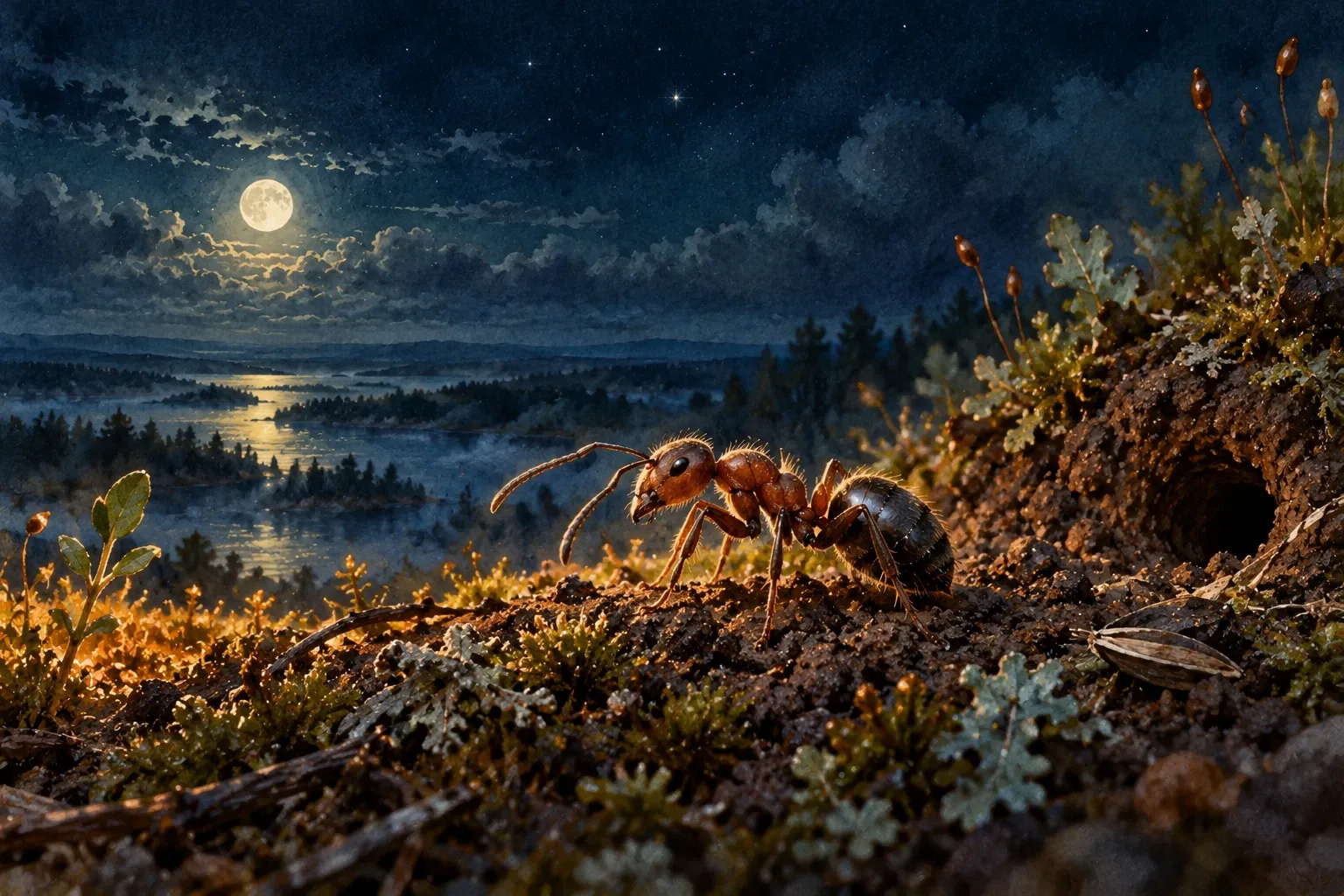
A scout ant wanders over earth and stone until it finds a crumb. Then it turns toward home, leaving a scent trail that other ants can follow. What was one small discovery becomes a road, and what one ant could not carry becomes food for many. Ant’s meaning begins in that quiet passage from finding to sharing: keep going, prepare with care, and let steady work join up with the work of others.
A road made one step at a time
Ants gather food, tend young, and build chambers and passages below ground. Some leaf-cutter ants carry pieces of leaves below ground to feed a fungus garden; the fungus, in turn, feeds the colony. Their work depends on a partnership tended day after day. Ant shows how a lasting structure can begin with a small task repeated faithfully. A foundation is laid by doing what is needed now, then returning to the work tomorrow.
This is the ant’s spiritual teaching for a season that asks for patience. When a task sprawls before you, choose the next useful step and give it your attention. Ant does not cross a distance by wishing it shorter; it follows the trail, keeps moving, and reaches the nest in its own time. Let care set your pace. Prepare for the work ahead while you have strength to do it, and trust the quiet progress that gathers beneath the surface.
The old story of Ant and Grasshopper carries this lesson into the turning year. Ant gathers provisions through summer, while Grasshopper spends the season singing; when winter comes, their choices meet the cold. Ant’s storehouse is a picture of foresight: some days are for gathering what the next season will need. The tale also leaves a tender pause beside its lesson. When someone arrives hungry, a hand can still open; work teaches readiness, and kindness decides what readiness is for.
A nature made for company
Ant’s nature is industrious and attentive to the colony. A trail lets other workers find a route to food; underground chambers make room for the many tasks of a shared home. Ant’s strength lies in joining efforts without losing sight of the work each one must do. A colony is not a single pair of hands. Its life is made by workers gathering, tending, building, and finding their way back.
If Ant is your lifelong kin, you know how to see the task behind the confusion. You notice what needs arranging, keep a group close to its purpose, and stay with a plan after its first excitement has passed. Like the ant that keeps to a scent trail, you can help others find a reliable way forward. Hold to that gift, and remember that the worker is part of the living colony, too; your own strength belongs among the strengths you help gather.
When a difficult season calls for more than careful planning, Ant lends endurance. Ants meet a barrier by continuing along the trail or finding another way around it. Call on that steady nature when a project feels daunting, when several people must coordinate their work, or when isolation makes the load feel heavier. Ask for help, make the next step clear, and keep building. The ant’s power is the patient resolve to carry one piece, then another, toward a home that serves more than one.
When ants come into a dream
Ants appearing in a line can bring attention to small duties collecting around you. A trail crossing a table, wall, or path may point toward the place where those demands have gathered. If the ants are carrying food, the dream turns toward preparation: what are you storing up, and what future season are you providing for?
A single ant can suggest loneliness or feeling too small for the task in front of you. The image has another side, too: even a solitary ant is built for a life connected to a wider colony. An ant biting you may signal a sharp irritation that has begun to claim too much of your attention. Look at where the bite lands in the dream and what else is happening there; the sting may give form to a trouble that has been easy to overlook.
Flying ants bring the brief, striking image of ants leaving to begin new colonies. In a dream, they may speak to a wish for freedom, movement, or a fresh beginning beyond familiar ground. Eggs or a queen in the nest may suggest fertility or growth: something new is taking shape, though its beginnings remain hidden. A dream’s meaning rests in its own scene; the ant’s action, its place, and the feeling it leaves behind help tell the story.
Stories from Hopi and Chinese traditions
In Hopi stories, the Ant People lead people underground when fire destroys one world and ice destroys another. They shelter them in caves and give them food, carrying a community through devastation toward safety. The story places Ant in the deep earth as a protector and provider, one who knows how to keep life going through a time when the surface cannot be trusted.
In Chinese tradition, the ant is called a righteous insect. Its tireless service and steady conduct have made it a figure of virtue and duty. That meaning grows from watching a small creature persist at its work and take part in a life larger than itself. Each tradition keeps its own story: one remembers refuge beneath the earth, another sees moral steadiness in the ant’s labor.
The scout ant’s scented road fades from the open ground and disappears beneath a stone. Still, the workers find their way along it, carrying food toward the dark chambers where the colony waits. Ant leaves us with that image: a small, faithful path can bring many hands home, and patient work can become sustenance shared.