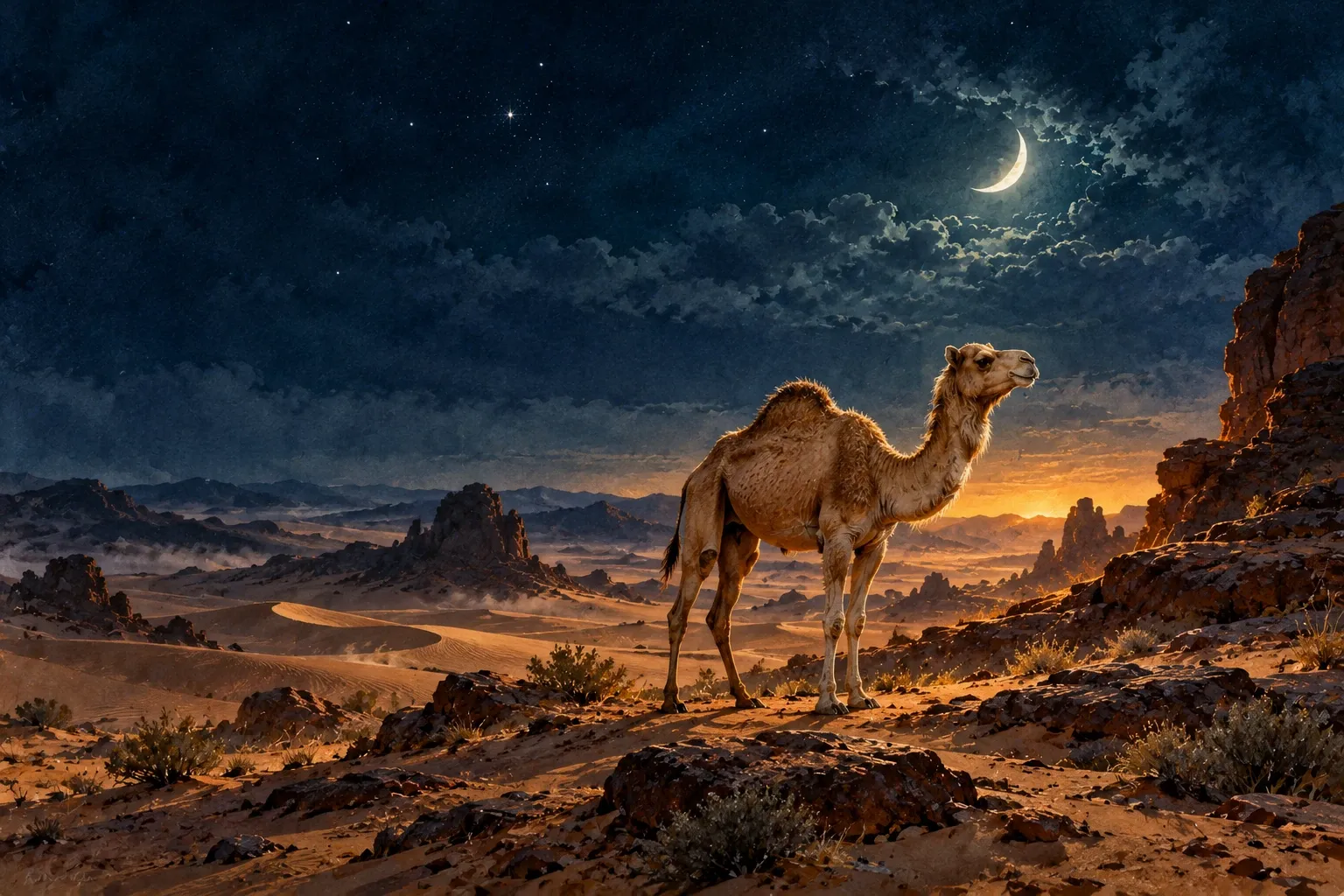
A camel folds its long legs beneath itself and kneels so a traveler can load its back. Then it rises, takes the weight, and crosses the open country at an even pace. Its hump stores fat, not water; its body makes careful use of what it has. Camel’s meaning begins there: endure by tending your reserves, and carry only what the journey asks of you.
The camel’s measure of endurance
The camel’s strength is not a sudden burst. It is the steady work of crossing dry ground, keeping its footing, and finding a way through heat and distance. Its long legs hold it above the hot sand, and its broad feet spread its weight. When water is scarce, it can go on for days; when it reaches water, it can drink deeply. The lesson is a rhythm: conserve when the road is lean, replenish when the chance comes.
When a hard season stretches ahead, Camel says to count your strength honestly. Keep the work that matters close, and let the rest fall away. The camel carries a load because someone has placed it there; it also kneels again when the load must come off. Endurance does not mean keeping every burden forever.
A companion for the long crossing
A camel is patient in its pace and useful to the people who travel with it. For a season when you must go farther than feels comfortable, its spirit animal message is simple: trust the ground beneath your next step and keep going. The camel cannot see the whole route at once, but it can continue across the stretch in front of it.
For those who feel a lifelong kinship with Camel, its nature is self-sufficient and deliberate. It does not waste its strength on haste. Its bond with a traveler rests on trust: the camel bears the load, while the person tending it makes sure the animal has water, food, and room to rest. That kinship asks you to be dependable and to accept care as part of the work.
When a task calls for stamina, Camel lends the calm strength to carry it through. A pack animal kneels to be loaded, then rises with the weight; call on that image when service is needed, and remember to set the load down when the work is done. If you feel depleted, follow the camel’s example and replenish before you ask more of yourself. The road is long enough to reward a measured pace.
The camel’s songs and shared roads
Among Bedouin communities, the camel belongs to daily life: people rely on it for travel, milk, meat, and materials. This closeness is also carried in sound. In Saudi Arabia, Oman, and the United Arab Emirates, herders practice Alheda’a, an oral tradition of rhythmic calling that guides camels to water and pasture, prepares them for milking, and helps gather them in danger. The camel’s meaning here is not solitary survival. It is a relationship built through attention, knowledge, and repeated journeys.
In Mongolia, herders perform a coaxing ritual when a mother camel rejects her newborn or an orphaned calf. The mother is tethered near the young camel as a singer begins a steady song with gestures and chanting, coaxing her to accept it. This is endurance in a tender form: patience used to keep a fragile bond alive.
Camel caravans also carried goods between distant regions, helping traders move silk, spices, and other wares across difficult routes. Their tracks joined people who might otherwise have remained strangers. Camel carries that meaning too: travel can widen the world, and a steady companion can make exchange possible.
When a camel visits your dreams
A camel appearing alone may point toward a long crossing in waking life: a goal that asks for persistence, or a personal journey whose destination is still far off. If the camel bears a heavy bundle, the dream may turn your attention to the weight you are carrying and whether all of it belongs with you. A herd loaded with goods can suggest provision and the hope of reaching a place of greater ease.
If the camel seems tired or the journey feels endless, the image may speak to depleted reserves. It may be time to rest, gather what sustains you, and measure your next stretch carefully. A camel that carries you safely through a difficult landscape brings a different emphasis: trust the practical strength you already have, even when the route is unfamiliar.
The camel keeps its head above the sand and its pace beneath the rush. It crosses with what it needs, bears what it is given, and kneels when the journey calls for rest. Let that image stay with you: a camel rising beneath a dawn-colored load, still moving, with the long road opening ahead.