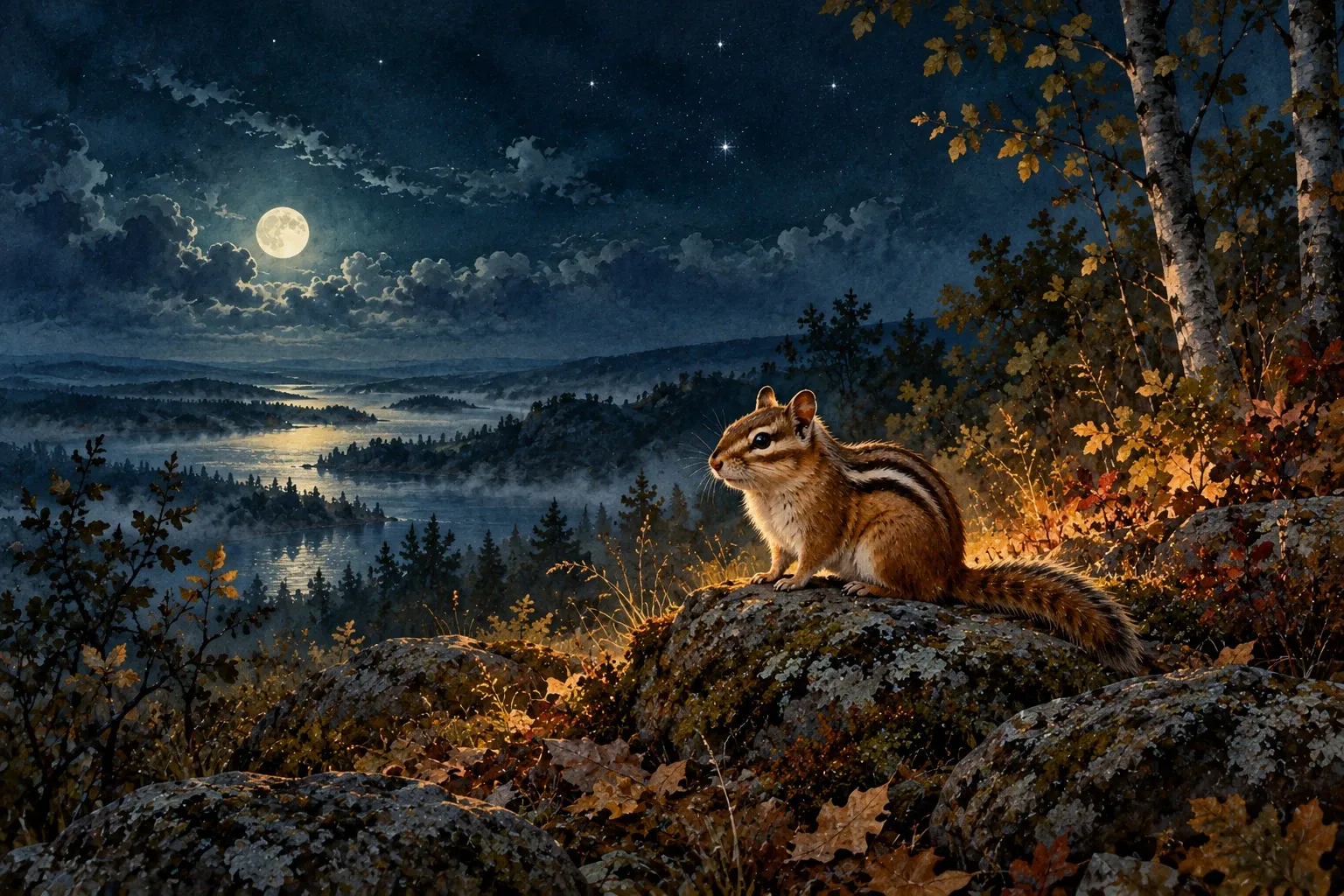
A chipmunk can vanish with a nut bulging in each cheek, then pop up again beside a stone as if the woods had made a small joke. It is quick, watchful, and busy with tomorrow; still, it pauses to chirp and explore. Its meaning lives in that balance: prepare with care, keep your wits close, and don’t let readiness crowd out delight.
The chipmunk’s small stores and bright attention
A chipmunk gathers food in its cheek pouches and carries it to hidden chambers in its burrow. Each trip takes attention: what is worth carrying, where the safe path runs, which entrance will serve when the woods grow dangerous.
This is a creature of modest provisions and nimble choices. It does not need to command the forest to make a life in it. A few mouthfuls at a time, a well-used tunnel, an alert ear: these are enough to meet the season. Chipmunk teaches that foresight can be lively, even cheerful. Gather what matters. Keep a little in reserve. Look up from the work often enough to see what is moving nearby.
Its quickness is more than haste. The chipmunk knows its routes and slips into cover when danger draws near. There is a kind of wisdom in being hard to catch: not every plan needs to be announced while it is still taking shape. Curiosity helps too. This animal noses into the day, notices small changes, and answers the woods with sharp chirps. Its attention is not grim. It is alert because the world is interesting, and because paying attention keeps it alive.
When chipmunk comes close
When chipmunk runs beside you for a season, it carries the spirit of a busy, uncertain stretch: keep watch, make practical plans, and let curiosity lead you toward one fresh thing. A cache of food is built by many small trips, not one grand haul. The chipmunk’s lesson is to make a beginning you can repeat, then return to it with energy.
For a lifelong kinship, chipmunk’s nature is quick, sociable, and inventive. It darts from task to task, but it also knows where it has stored what it needs. That lively nature can remind you to value both the story and the listening that follows it. Chipmunks chatter, call, and sound alarms; their voices carry useful news. Speak with care, and pay attention to the tone that accompanies another person’s words.
Call on chipmunk’s strength when a task asks you to explore, improvise, or protect your resources. It finds a route through roots and rocks, then changes direction in an instant. Let that be your model: make a plan, keep an exit in mind, and respond to what is actually before you. The chipmunk also makes room for play in a life of errands. After the stores are laid by, there is still a sunny patch to investigate.
A boastful bear declares that it can stop the sun from rising; chipmunk waits through the night, then laughs when dawn comes as it always does. The bear catches chipmunk and leaves marks down its back, but chipmunk talks its way free. In this story, a quick tongue brings trouble and then finds the opening out. The lesson is not to silence yourself; it is to know when a joke has crossed into a wound, and to keep enough sense to ask for a pause when things turn dangerous.
Chipmunk in dreams
A chipmunk that startles you by appearing suddenly can point to a pleasing opportunity with a cost hidden nearby. The image of nuts scattered along its trail sharpens that warning: temptation can look like abundance, so take time before agreeing to a promise or commitment.
If the chipmunk turns its back, the dream may be asking you to turn from a tie to the past that keeps pulling you backward. A chipmunk playing dead suggests a problem might be met with quick thinking and a clever pause. Holding one quietly in your hands points toward peace in a difficult relationship; feeding one suggests a trusted friendship approaching. A pile of nuts carries the image of improving resources, while a chipmunk running wildly from place to place reflects scattered effort and unfinished tasks.
Other scenes give different emphasis. Hunting a chipmunk warns against chasing trouble or making a hotheaded choice. A group of chipmunks points toward the comfort of close friends. One running between two trees puts a choice before you, while a chipmunk at your door carries the image of visitors arriving. Baby chipmunks scattering out of sight can stir concern about young people in your care. These are dream images, not fixed forecasts: the chipmunk’s own behavior gives each one its shape.
The chipmunk’s lasting lesson
Chipmunk is small enough to slip beneath a root, yet its days reach well beyond the next meal. It stores food for lean times, watches for danger, and keeps returning to the bright business of the present. Take its lesson in your own measure: save what will sustain you, listen closely, and let a little playfulness travel with you. Somewhere under the leaves, a striped back disappears into the burrow—and the forest keeps growing around the seeds it carried.