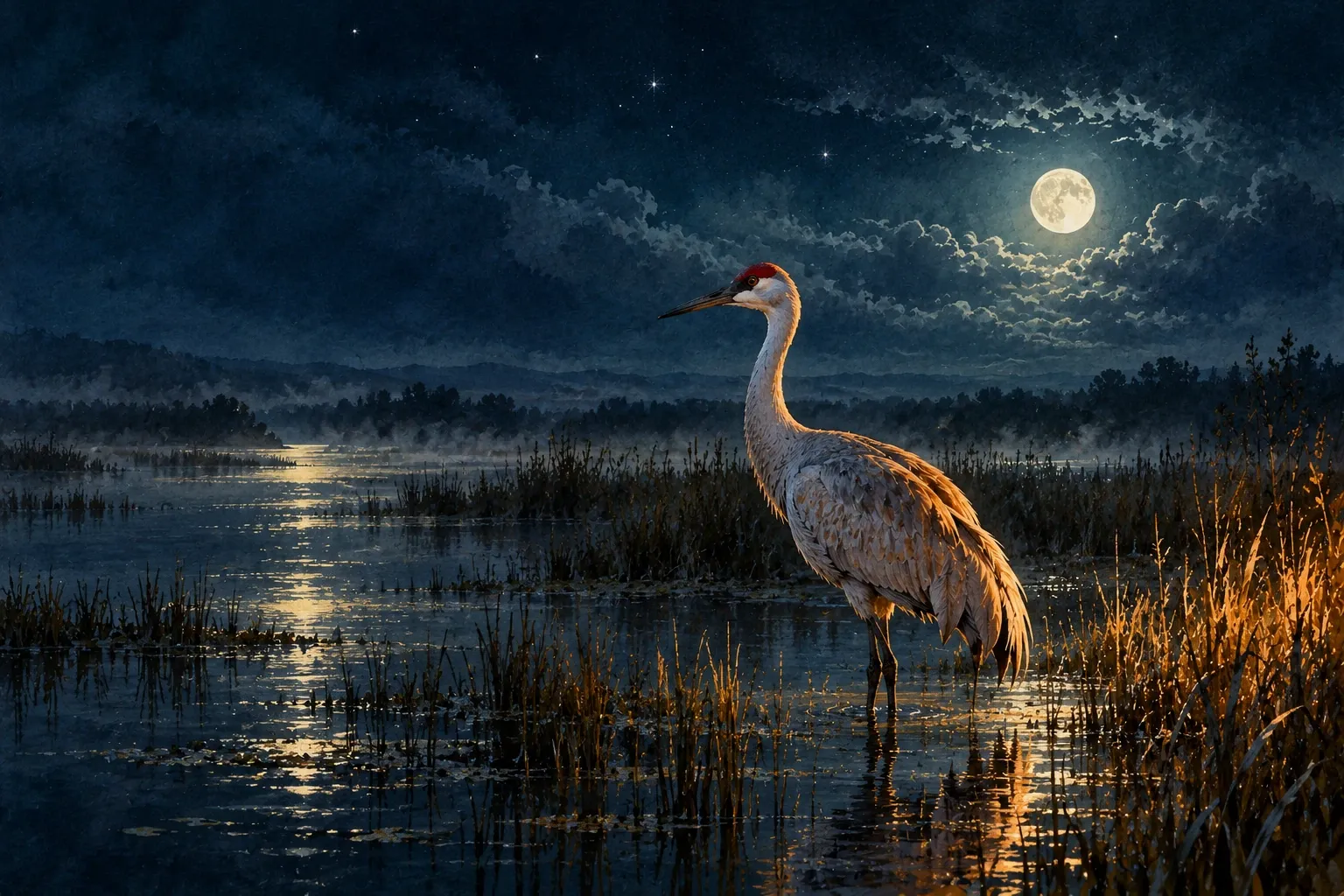
A crane can hold its place in a marsh so quietly that the water seems to settle around it. Then it steps, strikes at its prey, or opens its wings and climbs into the sky. That change from stillness to swift movement carries the crane’s central teaching: attend closely to what matters, and let your next movement come from that attention.
The crane’s steady eye
A crane stalking through shallow water watches for the right opening. It does not spend its strength in restless motion. The old tale of a crane keeping watch while its flock sleeps gives that alertness a shape: the sentinel stands guard through the night, holding a stone so its fall will wake the bird if sleep overtakes it. The story turns a familiar sight—cranes resting on one leg—into a picture of care for the whole community.
When the crane comes as a guide for a season of life, it tells you to gather your scattered attention. Choose the duty that matters most today and give it your clear eye. A crane’s long neck lets it watch across the marsh; its still posture is ready, not idle. The bird’s example helps when worries multiply or two important tasks pull at once: pause long enough to see what is actually before you, then answer that need first.
Some people feel a lifelong kinship with the crane’s measured nature. They watch before judging, take care with what is entrusted to them, and keep a steady rhythm in their work. The crane parents its young in secrecy, and both parents share in raising them. Their quiet protection speaks to anyone tending something new or vulnerable. Guard the beginning until it has strength of its own; let it grow before asking it to stand in the open.
When a long passage or difficult change calls for resolve, the crane lends endurance. Its migrations cross great distances, and its strong wings carry it over high ground. It can move between water, earth, and open air, each element asking for a different kind of balance. Let that be your strength in transition: stay grounded in what you know, feel your way through uncertainty, and lift your view when the path opens.
A dance that gathers others
Cranes dance in elaborate courtship displays. They leap, bow, spread their wings, and call; the movement can draw other cranes into the display. A flock that began in stillness becomes animated together. This is the bird’s joyful lesson: attention and discipline have room for play. Dance brings the body into the conversation and lets connection be seen as well as heard.
Call on the crane’s strength when a conflict needs patience and a clear voice. Cranes communicate through calls of varying tones and volumes, and they use their bodies to make the message fuller. Watch before you speak; then say what you mean plainly. In a tense gathering, the crane’s nature favors listening for both feeling and reason, and helping people find common ground.
The crane also carries the meaning of renewal. The whooping crane became a sign of wildlife conservation after overhunting brought it near extinction. Its return from that edge makes the bird an image of something precious recovering: a creative impulse, a neglected interest, or a hope you thought had gone quiet. Its loud call can sound like a celebration of life beginning again. Follow what is coming back, and give it attention enough to endure.
Cranes in different traditions
In China, the crane is honored as the prince of birds and linked with long life, prosperity, and the heavens. Some Chinese legends say cranes live for a thousand years, and stories place them in the company of gods and immortals. Their graceful stance also shaped movements used in kung fu. These meanings grow around a bird whose long life, poised body, and movement through the sky invite people to imagine endurance and elevation.
In Japan, the crane is associated with long life and good fortune. Crane patterns appear on kimono worn for joyous occasions, where the bird’s elegant flight adds beauty as well as meaning. Folding a thousand paper cranes belongs to a tradition of wishing for good fortune. Sadako Sasaki’s story later brought the paper crane into a lasting image of hope and remembrance: after the Hiroshima bombing, she folded cranes while she was ill from radiation exposure.
Greek stories give the crane a stern eye for justice. One tale follows a thief until the bird’s pursuit forces him to confess. In that telling, the crane warns that wrongs do not always stay hidden. Celtic lore gives it a stranger, more mysterious place, connecting the crane with Annwn, the underworld, and with secrets of renewal. These are distinct traditions, each finding a different meaning in the same watchful bird.
When the crane visits a dream
A crane watching you patiently in a dream points toward flexibility. The bird is alert, but it can wait; consider where a little more room to change course would help. A crane flying overhead carries a different movement: its rising flight suggests prosperity or a hope gaining height. If it flies in a pair, the image turns toward partnership and the events two people are preparing to meet together.
A dancing crane can mark commitment or a bond growing more serious. A crane with a young bird brings the tenderness of care shared between parent and child; it may reflect affection being offered to you or the protection you are giving someone else. If many cranes gather around you, the image suggests awakening to a wider view of your life and its purpose. A crane flying north brings a more cautious sign in the old dream lore, pointing toward possible strain in business or money.
The crane’s way is to stand with its eye on the water and its balance held lightly. Then, when the moment comes, it rises without hurry, carrying its long attention into the sky. Keep that image close: the pause, the watchful eye, and the great wings opening when the way is clear.


