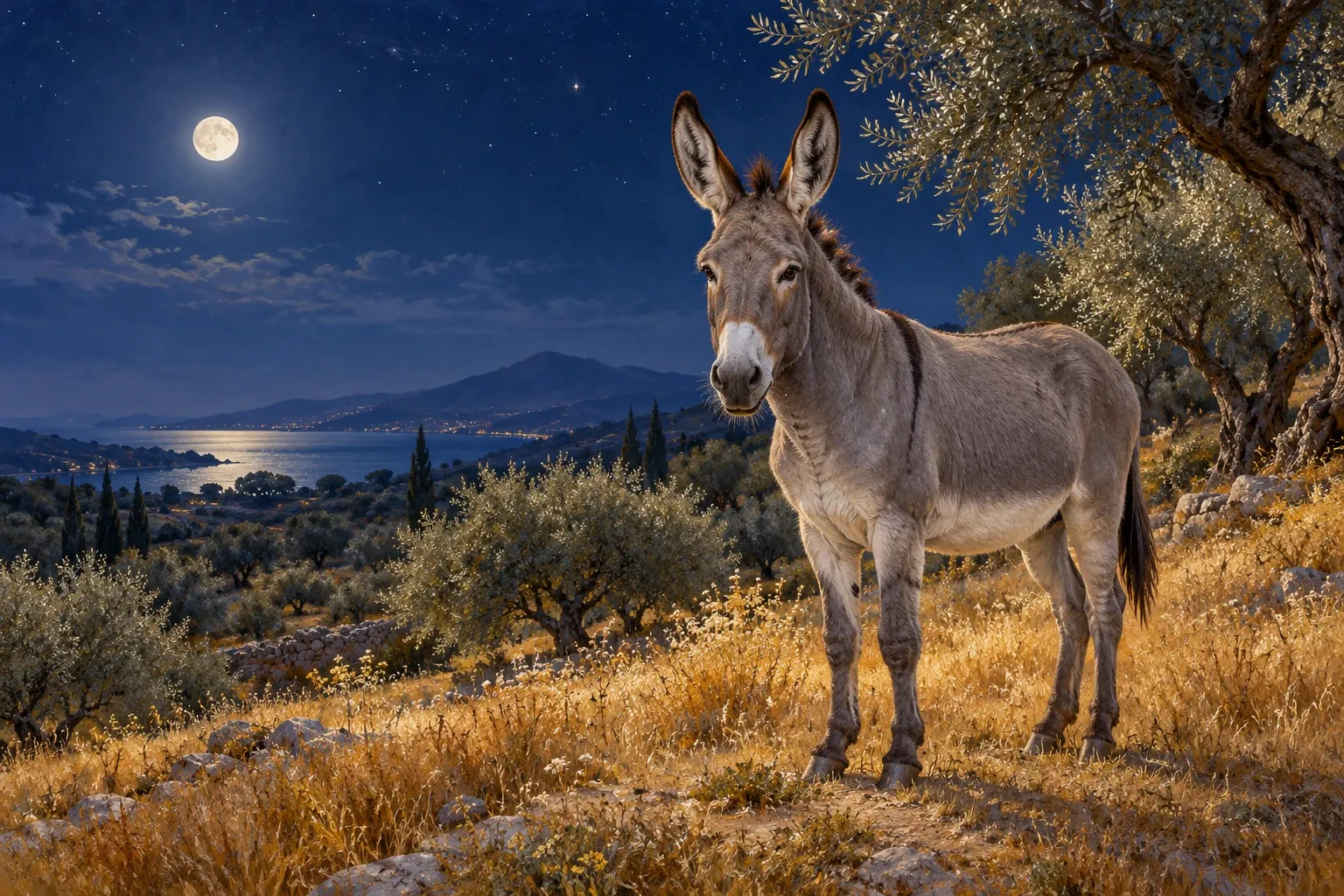
A donkey can stand with its feet braced on a narrow trail, ears turning toward a sound the rest of the caravan has missed. It does not hurry simply because someone pulls the lead. That pause is part of its wisdom: the donkey carries people and provisions far, but it knows when the path feels unsafe. Its meaning gathers around that sure-footed judgment—service with a will of its own.
The donkey’s careful courage
A donkey’s strength is the quiet kind that gets a load across rough country. For generations, people have relied on donkeys to carry water, food, fuel, and tools where roads and machines could not. Their patient work helped families travel, farm, and trade. The animal’s humility is no smallness; it is a steady usefulness that does not need applause.
Yet a donkey is not a willing instrument without limits. When it senses danger, it may stop and refuse to move. People call this stubbornness, but the pause can be sound judgment: a frightened animal that bolts may put itself and its handler at risk. The donkey teaches you to listen before you commit. When a task is heavy, take the next sure step; when the ground is unsafe, stand where you are and look again.
Its long ears turn toward the world, attentive to sounds at a distance. Its voice, too, carries. Donkey’s way is to notice, assess, and make itself heard when the moment calls for it. Let that be the shape of your courage: speak plainly, hold your ground, and keep your senses awake.
The load you choose to carry
When the donkey comes close in a demanding season, look at what rests on your back. It works hard, but it cannot carry an endless burden without harm. The donkey’s gift is not limitless sacrifice; it is useful effort joined to a clear sense of what is bearable. Say no when another person keeps adding weight, and offer your strength where it can truly help.
The donkey also has a nature of its own: watchful, independent, and slow to trust. It remembers familiar people and places, and friendship grows through patience. That kinship speaks to a life built on dependable care. You can be the one others count on while still choosing your own pace and protecting what matters to you.
For a difficult task, borrow the donkey’s measured persistence. It carries a load along a hard trail one careful footfall at a time; you can keep going by finding the safest route and pausing to check your direction. For a choice that feels wrong, borrow its planted hooves. The donkey does not move just to satisfy a tug. Let your answer be firm when your judgment is clear.
In old stories of sacred journeys, a donkey’s humble back bears a traveler toward a turning point. Christian tradition remembers Jesus entering Jerusalem on a donkey, a scene of humility and peace set against the power of a procession. The animal’s presence gives that passage its quiet dignity: strength can serve a great purpose without boasting of its own importance.
Donkeys in dreams
A donkey carrying a load can point toward work that is demanding but possible, especially if the animal keeps moving steadily. If it stops, the dream may be asking whether the burden is too much or the path deserves another look. A rider on the donkey can bring attention to who is doing the labor and who is being carried. If you ride, the image may speak to modesty; if someone else rides, consider whether effort is being shared fairly.
A braying donkey makes its presence impossible to ignore. In a dream, that sound may echo a truth that needs to be spoken aloud, or a worry that has waited too long for your attention. A donkey that is wounded or exhausted changes the meaning of service: care for what has carried you, and notice where persistence has become strain.
If the donkey refuses to go forward, ask whether it is fear, wisdom, or simple weariness that has stopped you. The animal’s pause is not the whole journey. It is a moment to listen, choose a sound footing, and begin again when the way is clear.
The old donkey at the end of the road
In ancient Greece, the donkey was associated with Dionysus, the god of wine, in part through its work carrying grapes from the harvest. In rural Ireland, donkeys carried people and household goods and helped with daily work; many families kept them close as useful companions. Across these different lives, the donkey stands near ordinary labor, travel, and the ties between people and the animals on whom they depend.
So remember the donkey on the rough path: ears lifted, load balanced, feet testing the earth. It keeps faith with the journey by knowing when to carry on and when to stand still. May you find that same plain courage in your own steps—steady enough to serve, and sure enough to stop.


