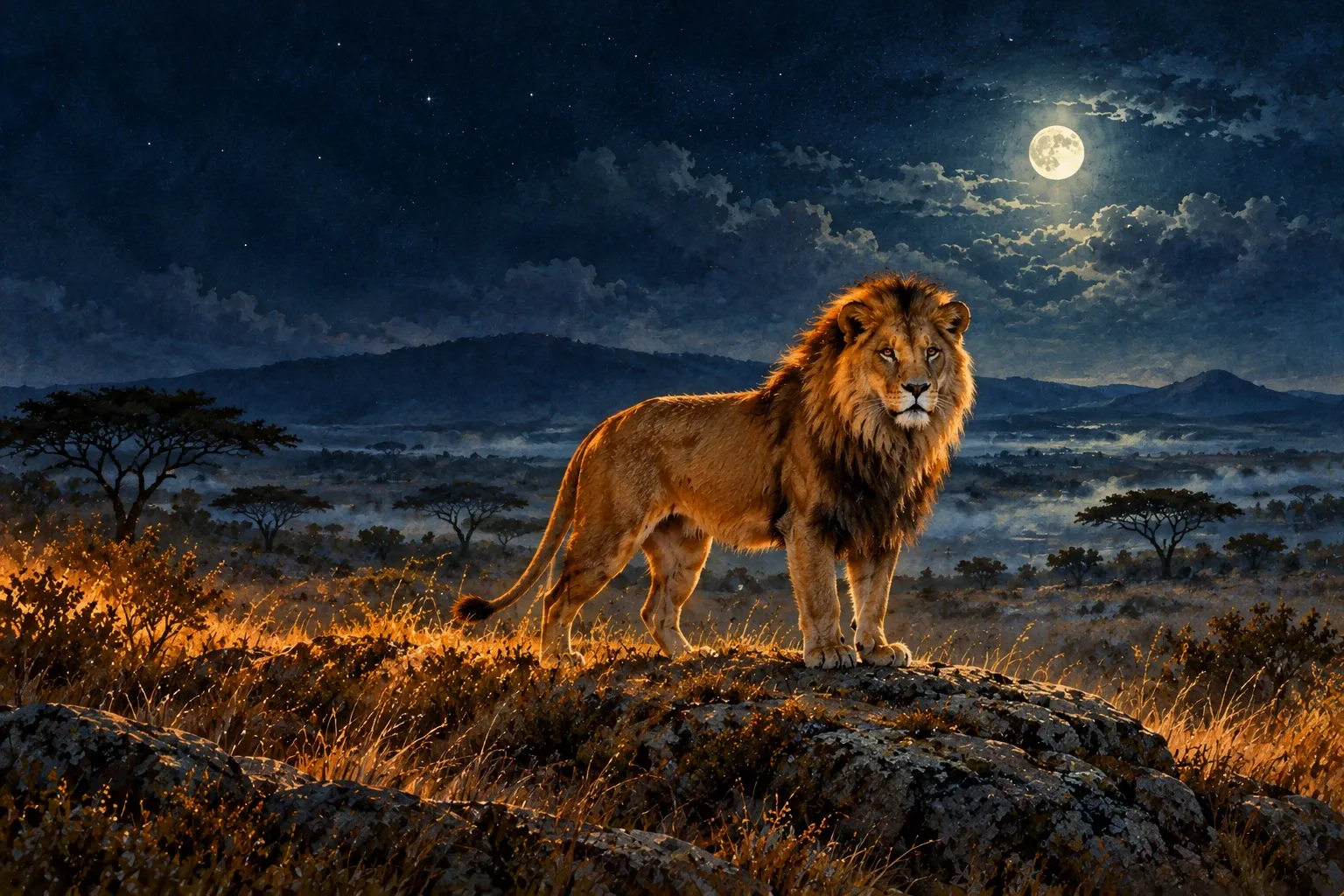
A lioness sinks low in the grass, eyes fixed on an antelope. The others spread through the dark, each taking a place; then the hunt breaks into a sudden rush. By day, the pride rests close together, saving its strength. The lion’s meaning lives in this balance: courage held in reserve, then spent to protect and provide. Its roar carries far, but its quiet work matters just as much.
The lion’s strength has a purpose
People have long seen the lion as a sign of power and authority. The animal itself gives that power a shape. A lion can stand its ground, but it does not spend every hour fighting. It rests, watches, and saves its force for what matters. Its strength is most worthy when it guards the pride and helps the group endure.
The lion also carries the life of the pride. Lionesses hunt together and care for the cubs, teaching them the skills they will need. Their work gives the lion a meaning of capable, sustaining care. The male’s mane and roar make him conspicuous, and he helps defend the group. Together, these different strengths tell a fuller story than command alone: leadership includes work, attention, and protection.
When the lion becomes a companion for a season of life, it tells you to hold your dignity through difficulty and use the strength you already possess. The lion listens and watches before it moves; let careful attention guide your next step. Then act with courage when the moment comes. Its lesson is firm: carry your power well, and let it serve something beyond your pride.
The pride and the person
A lion’s lifelong kinship is written in the pride. Lions are unusual among cats for living in groups, and their survival depends on shared effort. The lion teaches the value of knowing your place in a community: who needs protection, what work is yours, and when cooperation will carry you farther than solitary effort. If you are the steady one others gather around, let your presence make them safer and more capable.
When a task asks you to take the lead, call on the lion’s strength. Its roar announces territory and warns others away, while its stalking approach keeps the hunt quiet until action is needed. Speak plainly when a boundary must be held; keep your plans close while they are still taking shape. The lion’s courage is not a hunger for conflict. It is readiness joined to restraint.
The lion also knows stillness. It spends much of the day resting, then brings its energy to the hunt. When you are worn down or facing a long effort, follow that rhythm: preserve your strength, gather your people, and spend your force where it can do good. A protector’s work is not only to meet danger. It is also to help those in its care grow stronger.
When a lion visits your dreams
A seated lion can point toward a change in responsibility: the time to guide, teach, or hold a position others trust you with. The still animal has not lost its strength; it is ready without needing to prove it. Ask what deserves your steady attention, then meet the responsibility with dignity.
An aggressive lion may reflect anger rising beneath a quiet surface, or a conflict that feels threatening. The dream’s force asks for care: notice where a boundary has been crossed, and seek help if you feel unsafe. Its warning is in the lion’s charge, not a promise of what will happen.
Lions resting together in the sun bring a gentler image. Their closeness suggests the comfort of a loyal group and the ease of being among people who trust one another. A silent, stalking lion shifts the dream toward patience and a hidden change of course: there are times to move quietly, watching closely before choosing your moment.
Lions in sacred stories and art
In ancient Egypt, people connected the lion with the Sun and with protection. The goddess Sekhmet appears with a lioness’s head, joining fierce power to guardianship. The Great Sphinx holds a lion’s body, standing watch over a sacred place. These images give the lion’s strength a duty: protect what is entrusted to you, and keep watch over what should endure.
In Chinese Buddhist tradition, lion figures guard entrances, keeping watch at the threshold. Their stillness is part of their protection: power can stand alert without needing to chase every shadow. In Indian stories, Vishnu takes a form that is part lion and part man to overcome evil and restore balance. Together, these traditions place the lion beside a boundary, a sacred place, or a threatened order, where strength is measured by what it preserves.
Mughal artists gave the lion another meaning: in their paintings, a lion beside a lamb or calf signified peace and justice. A fierce animal at rest beside gentler life makes a memorable picture of power kept in balance. The lion does not lose its nature when it rests; its strength makes that peace feel protected.
When evening settles over the grassland, the pride draws close and the lion’s roar crosses the dark. It is a sound of presence, but the day’s quiet care has already told the deeper story. The lion teaches strength with a watchful heart: stand firm, gather your own, and let your courage keep the vulnerable safe.


