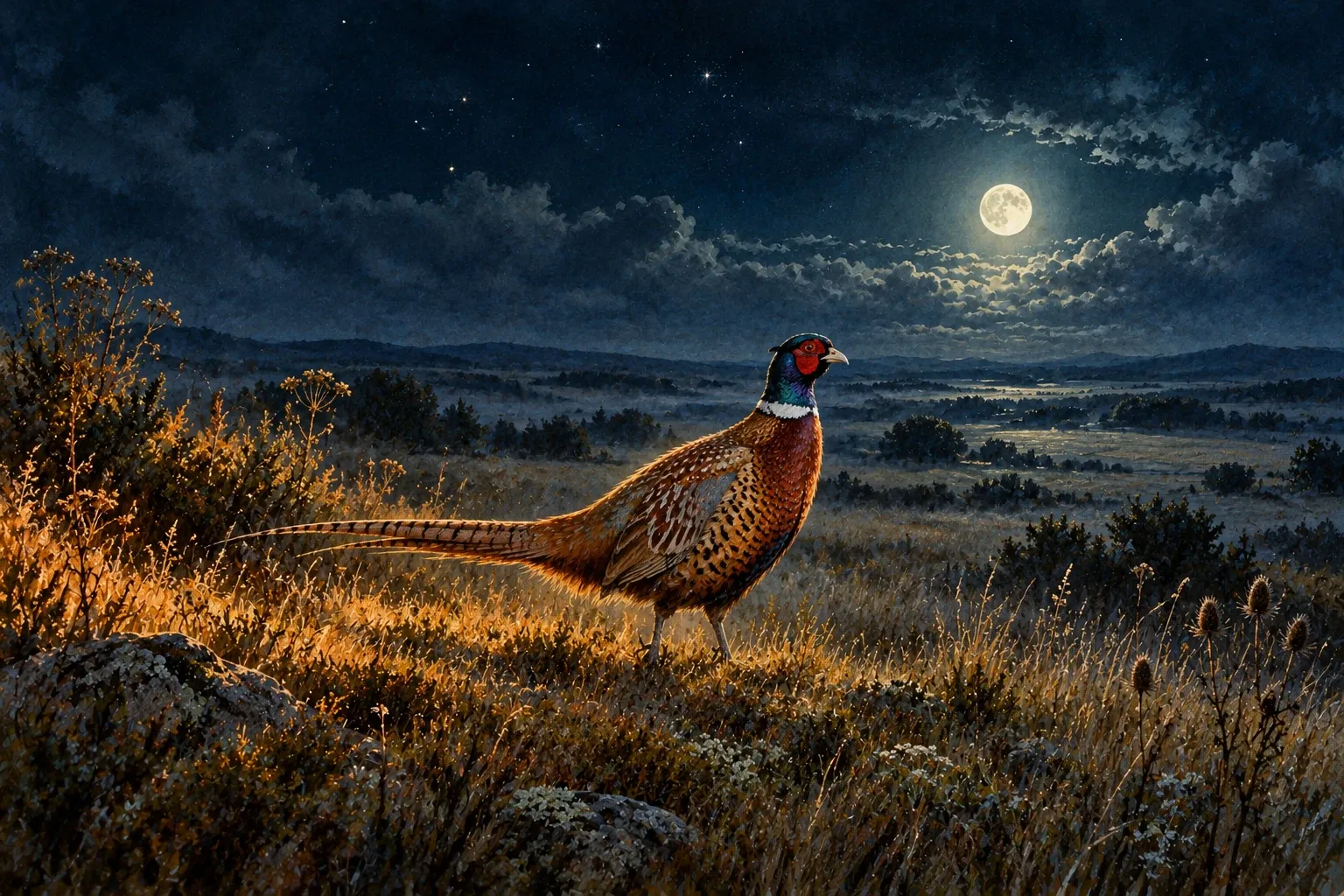
A pheasant can spend an afternoon almost lost among tall grass and brush, feeding on seeds, grain, and berries. Then danger comes close, and it erupts upward in a rush of wings and noise. The bird is beautiful, but its colors do not keep it safe by themselves: it must see, listen, move quickly, and find cover again. That is the pheasant’s teaching. Let your gifts catch the light, and keep your footing sure.
A bright bird grounded in the field
The pheasant belongs to the open field and the sheltered edge alike. It feeds on the ground, nests among tall grasses, and rests high on a branch at night, away from predators. Its life holds both display and discretion: brilliant feathers in the open, a quiet body hidden by grass when the moment calls for care. Pheasant brings imagination down to earth. A lovely idea can rise, but it needs attention and steady work to take root.
The male’s vivid plumage and long patterned tail play a part in courtship. He displays and defends his territory; the hen makes the nest and tends the eggs. These habits speak of attraction, fertility, and the work of sustaining new life. They also remind us that being noticed is only one part of what makes something flourish. Color can draw the eye; care gives what is precious a place to grow.
A pheasant’s keen sight and hearing help it detect danger. When threatened, it may burst into flight, then land and run for cover. Its alertness is practical, not fearful: notice what is happening, move when movement is needed, and settle again when the danger has passed. Keep watch over the people and work you love, and let them have room to live.
When the pheasant comes close
In a season when you have been hiding your abilities, the pheasant steps out of the grass in a flare of color. It says your skill is ready to be used. Name what you can do and offer it where it can help. The bird’s courtship display makes room for beauty and confidence; the way it feeds and nests keeps those gifts tied to daily life. Let your work carry the promise of your bright ideas.
When a hard stretch asks for patience, remember the pheasant that stays in its home range through cold weather and can endure lean days. It finds shelter and waits out what it cannot change. You can keep your head up, tend what remains in reach, and trust that a difficult season will move on. When the path opens, its sudden takeoff lends you the nerve to try something new, meet someone, or bring a story forward. The pheasant lands again, and so should you: give your courage somewhere solid to stand.
If this bird has walked beside you for years, its nature is expressive, inventive, and watchful. It loves open spaces, varied company, and a little color in ordinary surroundings. When you need to tell your story or make your talent visible, call on the pheasant’s bright confidence. Its long, showy feathers are part of its nature, not a reason to measure yourself against anyone else. Let your own way of being seen be honest, and notice the gifts others carry, too.
Pheasant dreams in field and flight
A pheasant holding its feathers close, as if embracing itself, may bring a dream of comfort and self-nurturing. The image can point toward something you have tended with care now beginning to show its life. A pheasant in flight may suggest that an idea is ready to leave familiar ground or that your way of living is changing. Its sudden, noisy takeoff gives the dream a feeling of energy breaking loose.
A dead pheasant may suggest that your creative spark has been neglected. If someone kills the bird, the dream may give shape to a blockage in your thinking or a force that is silencing an idea before it can grow. A pheasant pecking at the soil brings the gaze back to practical matters: give a new plan roots and let a relationship develop at its own pace.
If the bird crosses from left to right, the dream may reflect ambitions beginning to take shape after hard work; let them unfold without rushing. Many pheasants together may suggest plenty, providence, or a season in which possibilities multiply. The birds’ own actions give each dream its character: one bird close and quiet carries a different feeling from a flock scattered across a field.
The pheasant as messenger and emblem
In a Japanese tale, the deities Takamimusuhi and Amaterasu send the pheasant Nanashionokigishi to search for the missing Amewakahiko. Another tale sends the hen pheasant Nanashi after the cock pheasant fails to return, and Amewakahiko kills her with an arrow. The tale remembers the bird as a messenger on a dangerous mission, carrying news between the earthly and heavenly realms. Pheasant’s alert presence takes on a solemn weight: even a small messenger can carry something that matters.
In China during the Qing dynasty, court officials wore square rank badges on their robes, with birds marking the civil ranks. The golden pheasant signified the second rank, and the silver pheasant the fifth. Here the bird’s distinctive plumage became a public emblem of office and standing. In Japan, the green pheasant also carries an association with a mother’s love and the instinct to protect children, a meaning that echoes the care of the hen at the nest.
The pheasant ends where it began, in the grass: listening, watchful, ready to rise. Its bright feathers catch the light, then its quick feet carry it back to cover. Carry that image with you—the colored bird lifting from the field and returning to earth with its senses awake.


