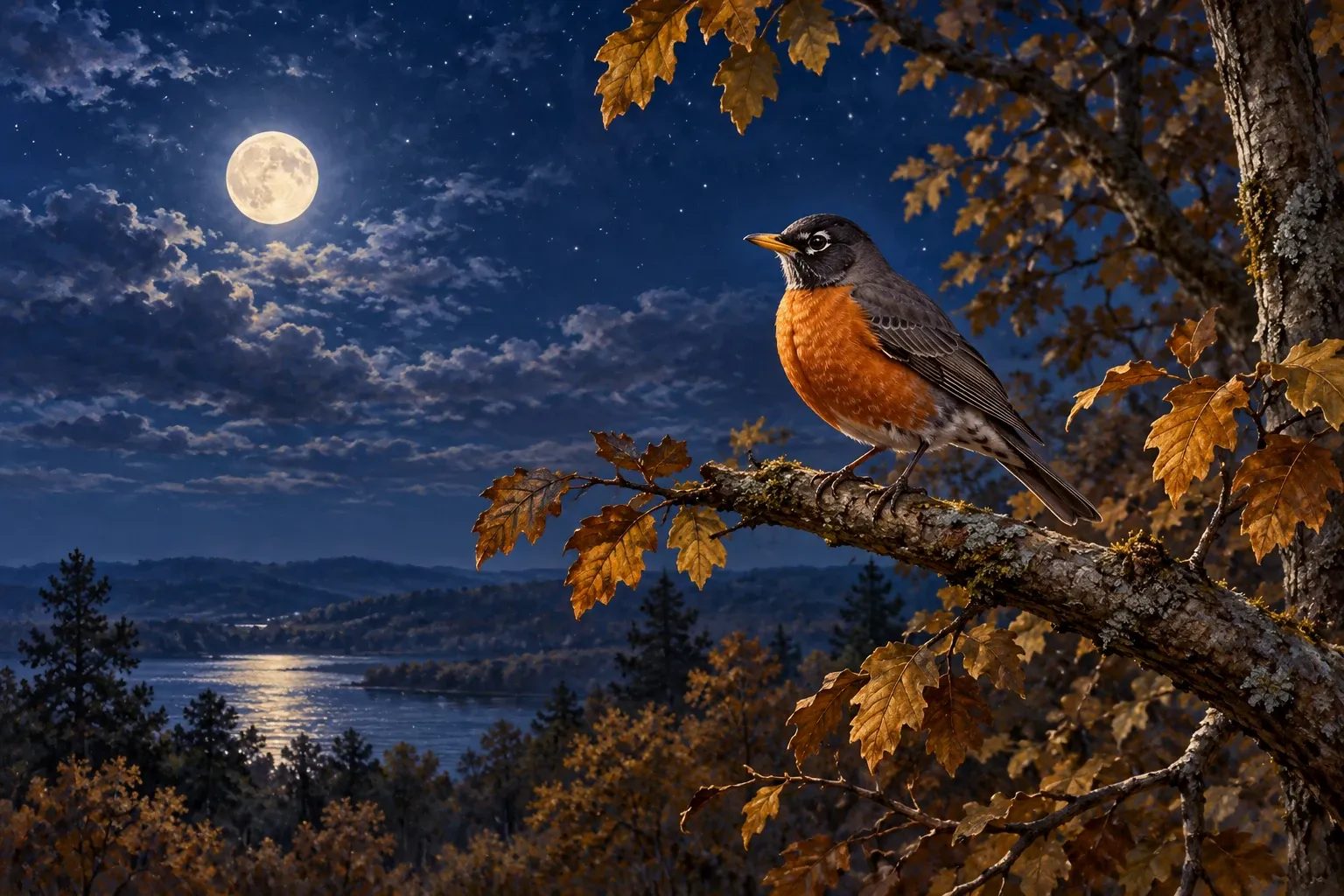
A robin runs over the wet lawn, stops, and cocks its head to listen for a worm beneath the soil. Its red breast catches the morning light. From a fencepost, its rolling song answers the cold air. This little bird does not wait for every branch to leaf before it begins its day. Robin carries the meaning of new growth: life returns through small, steady acts, and a clear voice helps it take root.
Robin’s song claims a place for growth
The robin’s song is both music and a way of holding ground. When two males meet at a boundary, they puff their breasts and sing at one another; the contest often stays in song instead of turning into a harmful fight. The red breast, so striking against the earth and grass, tells a neighbor where this bird belongs. Robin’s courage is lively and measured: it makes itself heard, then goes back to the work of living.
That is a good lesson when a new beginning needs room. Speak plainly about what you are making and what it needs, then give your strength to the work itself. Robin’s voice carries across a territory, and its song teaches you to speak with conviction without feeding every quarrel. New growth asks for both: a place to stand and the patience to keep tending it.
Spring is Robin’s season of power, but its promise reaches beyond the weather. The bird returns to familiar nesting places, lays pale blue eggs, and helps raise its young. Both parents feed the nestlings, who hatch without feathers and need food again and again. The robin’s bright beginning is bound to care: a song from the fence, a journey for food, another visit to the nest.
Robin keeps the nest and starts again
When Robin appears in a changing season of your life, its return marks a time to clear away what has gone stale and prepare the ground for what comes next. The bird searches close to the earth for worms and fruit; follow its practical example by tending the next small task in front of you. When an old cycle closes, let Robin’s springtime song give heart to the first step of the new one.
Robin’s nature is cheerful, watchful, and devoted to its young. Its lifelong kinship speaks to people who bring warmth to a household, protect what is tender, and keep their spirits after a difficult stretch. The bird feeds its helpless chicks many times a day; its example lends strength for the repeated, ordinary care that keeps a family or a piece of work alive. Gratitude belongs here too. A robin’s day is made from small finds: a worm uncovered, a perch secured, a clear note carried into morning.
Call on Robin when you need to begin a project, enter a new relationship, or steady yourself at a turning point. Males defend much of their territory by singing; let that behavior lend you a voice firm enough to prevent a disagreement from becoming a fight. And when hope runs thin, remember that this bird can sing before spring feels complete. Robin’s courage is not a promise that every road will be easy; it is the strength to keep tending the next living thing.
Robin in dreams
A robin flying away in a dream can point to an old plan or attachment that has run its course. The bird’s departing shape gives the dream a clear image of release: the thing is moving beyond your reach, and your hands can turn toward what remains.
A robin singing nearby may suggest that help or a useful opportunity is close at hand. In the waking garden, the voice often comes from a perch just beyond the place where you are looking; in a dream, the song can draw attention to a person or possibility you have overlooked. A robin seen in bright sunshine suggests welcome change and renewed confidence. Several robins in flight can speak to hope around work or a venture, the kind that gathers strength as it moves.
The robin in distinct traditions
In Iroquois tradition, the white ring around the robin’s eye marks prophetic sight and wisdom. The bird also stands for new life and renewal, while its red breast carries the image of fire; in some stories, Robin guards sacred fires. The Shoshone likewise read the pale eye-ring as a sign of prophecy, and people called on Robin to support decisions during ceremony. The bird’s bright gaze makes a fitting emblem of clear judgment: it watches closely before it moves.
The Blackfoot welcome Robin as a sign that their camps will remain safe from attack. The Omaha connect the bird with the rising and setting sun, seeing it as a bearer of truth. Hopi tradition places Robin as guardian of the southern corner of creation. Each people gives the bird its own place in a story of safety, wisdom, or the turning of day.
In British Christian folklore, people tell that Robin’s breast became red when the bird tried to comfort Christ on the cross. British folk tales also warn against harming the bird or taking its eggs, linking injury to Robin with misfortune for the person who caused it. Another old custom says to make a wish at the first robin of spring. These tales give the small red-breasted bird a place beside grief, kindness, and fresh hope.
When winter soil opens and the robin steps across it, the whole lesson is there in miniature: look closely, find what can nourish you, and carry your song into the morning. Robin begins again with its feet on the ground and its voice lifted clear.