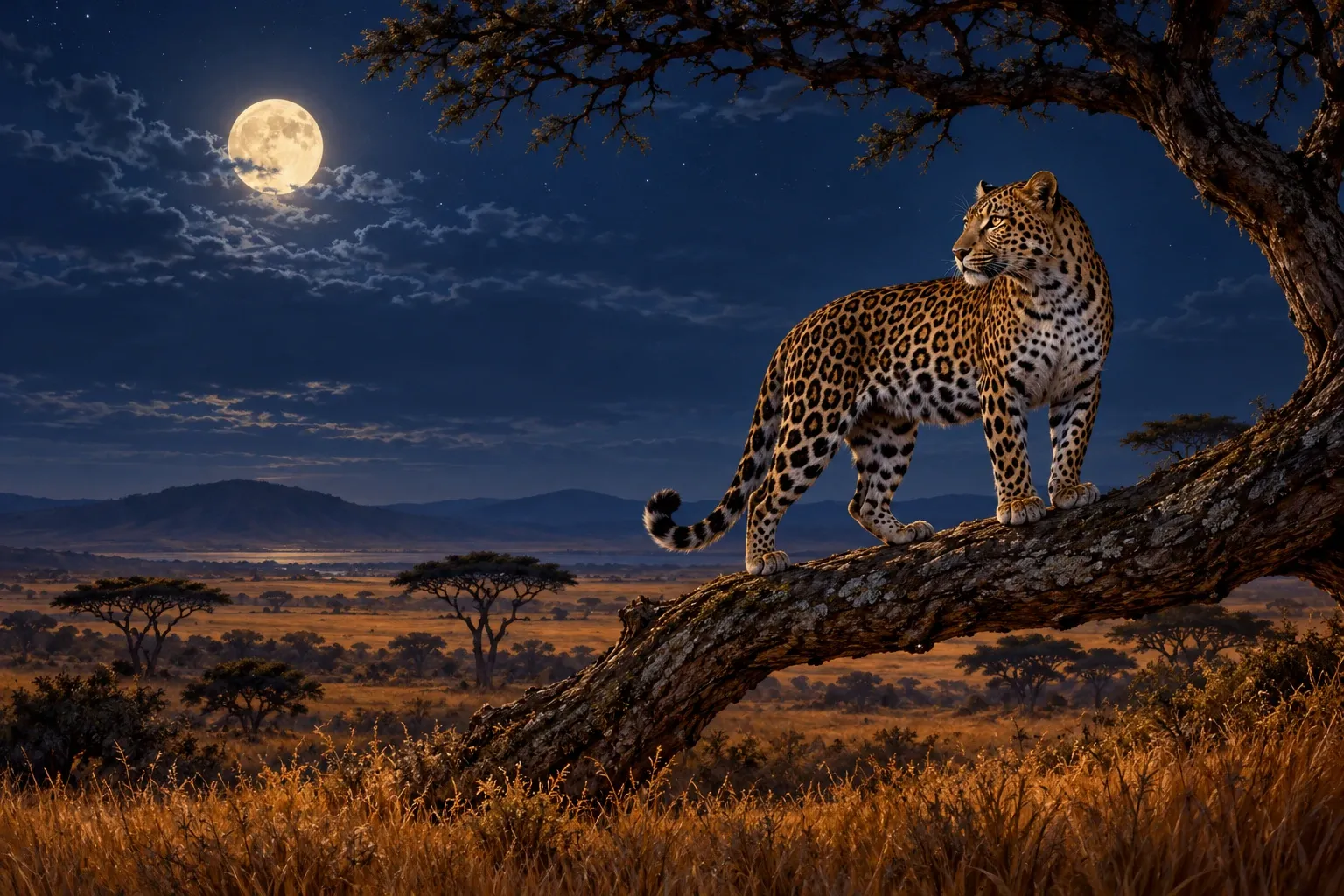
A leopard can haul its prey into a tree, where it is safer from scavengers, then settle among branches that break the outline of its rosettes. The cat has no need to announce its work. It watches, saves its strength, and climbs when the moment comes. Leopard carries a teaching of quiet power: see what is before you, know what you can carry, and move with purpose.
The patience behind the leap
A leopard hunts alone. It studies the ground before it springs, using cover and stillness to come close. Its spotted coat disappears among broken light and foliage. This is not a timid way of living; it is a patient one. Leopard knows that strength does its best work when attention guides it.
When this cat enters a difficult season in your life, remember how it waits for a clear opening. Take time alone in nature if you can, and let your thoughts settle before you choose your next step. The leopard’s hunt is brief and forceful after the long watch. Work in focused efforts, then rest and play; steady pacing keeps your strength ready.
A leopard keeps a territory and returns to its own paths. It does not need a crowd around it to know where it stands. Those who feel a lifelong kinship with this cat carry that self-contained alertness: they notice what changes, trust the knowledge gathered quietly, and hold their counsel. When a task needs courage, call on the leopard’s strength to act cleanly and protect what matters. Its power is measured, not showy.
Rosettes, instincts, and a life of change
The leopard’s rosettes help it blend into the vegetation. They belong to its nature, and so does the solitary life it has made its own. This gives its spots a tender meaning: the marks that make you distinct are part of how you find your way. Let the lessons of your past become knowledge you can carry, not a reason to hide.
The cat is a skilled climber, quick and agile, but it does not spend every hour in motion. It watches before a hunt and carries food up into a tree. Its example joins resourcefulness with restraint: protect what you have earned, choose the ground that serves you, and keep enough strength for the next hard climb. When you are pursuing something important, keep the plan close until your work is ready to stand on its own.
Leopard also belongs to the dark hours. Its night-roaming life has linked it with the moon and with the mysteries that seem easier to feel than to name. In the language of spirit, the cat crosses between what is known and what remains hidden. Its gift is discernment: attend to the small signs, notice when a story does not fit, and let truth sharpen your next move. Change may ask you to leave an old way behind, but the leopard’s lesson is practical: gather your strength, study the path, and take the opening when it appears.
The leopard in dreams
A leopard in a cage carries an image of protection. Something powerful is held behind a boundary, or a guarded place offers shelter. The cage changes the cat’s movement, so the dream may also point to strength that is present but contained.
If the leopard attacks, the dream turns toward difficulty or turmoil. Its sudden force can give shape to a struggle that is pressing close. A leopard walking with you brings the image of a companion on a journey: alertness and courage beside you as you travel. A mother leopard with cubs joins fierce care to family life, and can suggest joy, compromise, or peace of mind. Each image turns on what the cat is doing; its stance and movement give the dream its particular weight.
Stories carried by the leopard’s skin
In ancient Egyptian tradition, Seshat, the goddess associated with wisdom and writing, wore a leopard skin whose spots were linked with the stars, eternity, and mastery of numerology. Her hieroglyph also became a sign for the year, fitting a goddess remembered as a keeper of records. The patterned skin joins the leopard’s visible markings to the work of remembering and measuring time.
An Arthurian tale gives the leopard a stranger place. The Questing Beast has a serpent’s head, a leopard’s body, a lion’s legs, and a deer’s feet; its growl sounds like hounds in pursuit. Its mixed form makes it an image of disruption and danger in the knights’ quest. In a different Japanese tradition, Fujin, the god of wind, wears leopard-patterned clothing, a mark of fierce force.
These stories keep their own shapes. One sees the leopard’s spots in the heavens and in the keeping of years; another sets its body inside a troubling beast; another clothes a wind god in its pattern. Together, they remember what the animal itself shows: hidden strength, keen attention, and a presence that can cross from the familiar into the unknown.
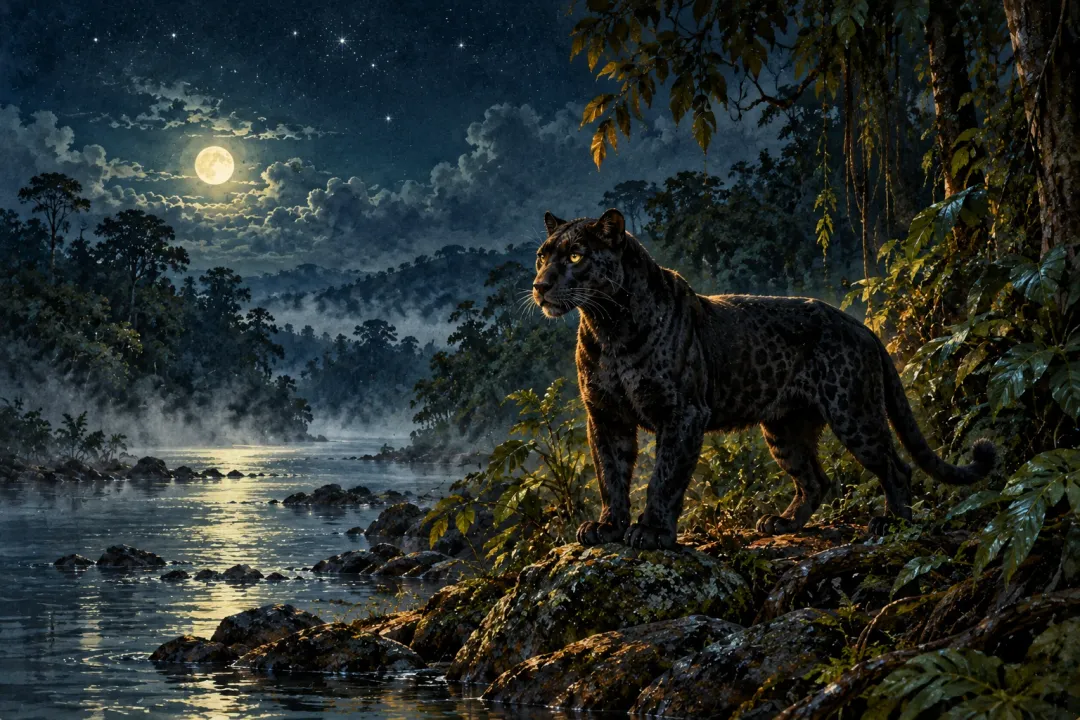
The leopard slips through the leaves, each rosette disappearing into the shade. It climbs with its meal held fast, then rests above the forest floor. Carry that image with you: be still enough to see clearly, and spend your strength when the path opens.