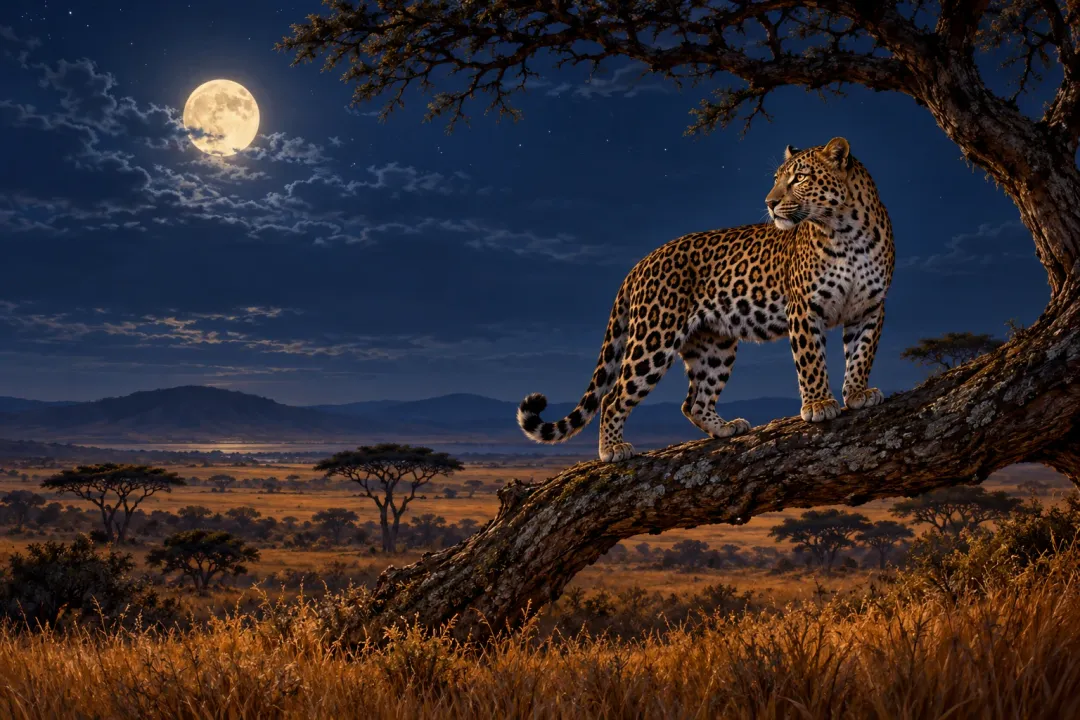
A panther can vanish into shadow while its eyes keep the whole clearing in view. It does not spend its strength announcing itself. It waits, listens, and moves when the distance is right. That is the panther’s teaching: your deepest power does not need to be loud. It grows when you trust what you see, keep your purpose close, and act with care.
The panther’s quiet power
“Panther” can mean a leopard or a jaguar, and the black panther is a dark-coated form of either animal. The dark coat does not make a separate species; in the right light, the rosettes still show through. The name itself carries a little mystery, because it gathers two great cats under one shadow.
Both cats hunt by stealth. A leopard can climb with its prey and keep it out of reach; a jaguar is powerfully built and can crack a turtle’s shell. Their different bodies show two kinds of force: nimble persistence and concentrated strength. The panther joins them in a single lesson. Notice what the moment asks of you, then bring the right strength to it.
The cat’s stillness is part of its skill. It can freeze among leaves, hear what stirs, and choose the moment to move. Panther teaches you to work quietly toward what matters. Share your intention with care, conserve your effort, and let your actions speak when the time comes. Its strength is swift, not endless: a burst of focused effort followed by rest serves it better than a chase without pause.
When old strength returns
A panther is often alone, keeping its own ground. Its nature offers a kind of kinship to people who need solitude to hear themselves clearly. If you have been moving through a hard season, the panther’s story is of a power that can go quiet without disappearing. In the dark, it remains alert. When you are ready, it lends the courage to look directly at what you have kept out of sight and begin again.
The female leopard raises her cubs largely on her own, guarding them from intrusion. Panther’s care is fierce and practical: protect what is still growing, and be clear about who gets to shape it. The cat’s acute senses also give its story a tactile edge. Its whiskers help it read close surroundings, while its ears turn toward faint sounds. Let your own attention sharpen: notice what feels welcome, what unsettles you, and what your instincts have already picked up.
Call on the panther’s strength when a task needs a decisive finish. It teaches you to conserve energy, wait for a clear opening, then commit fully. Its hunting is not a lesson in harming others; it is a picture of attention brought to bear on one necessary task. When anger rises, remember the cat’s precision and choose your response with care. A powerful strike can wound more deeply than you intend.
The black panther’s darkness is not empty. It is the cover under which life watches, rests, and prepares to move. In this image, night can hold both fear and possibility: a time to face old pain, let a worn part of life fall away, and reclaim strength that had been hidden there. The panther does not promise that every loss will be repaired. It shows that a new beginning can take shape after a difficult ending.
Panthers in story and art
The ancient Maya pictured a jaguar god of night, fire, and warfare, joining the cat’s nocturnal presence to forces that could protect or threaten. At Classic Maya royal courts, rulers wore jaguar pelts or sat on jaguar thrones, making the animal a sign of authority and power. These are particular Maya traditions, not a teaching shared by every people of the Americas.
Greek stories give the panther a different path. Dionysus, god of wine and renewal, was said to have been nursed by panthers and was sometimes shown riding a chariot drawn by them. In this story, the cat travels beside a god of transformation: an image of life breaking through restraint and returning with new force. The panther’s old promise of rebirth comes into focus here—not as an easy change, but as the courage to emerge from an ordeal altered and more fully yourself.
When the panther enters a dream
Still, the animal’s habits give you something concrete to follow. A panther watching from cover may point toward a truth you sense but have not yet brought into view. One that attacks may picture a pressure or anger that has gathered force; ask what is closing the distance and what response would be measured. A wounded panther may echo a part of your own strength that needs protection or tending before it can move freely again.
The dream may turn on how the cat behaves. If it guards you, take that as an image of the courage you are finding within yourself. If it stalks you, consider what you are avoiding or what feels as though it is following close behind. These are possibilities, not omens. The panther leaves the dream with the same quiet counsel it carries through the dark: watch closely, keep your strength, and choose your moment.
When the panther goes still beneath the trees, its power has not left. It is listening, whole and ready, until the path opens and one sure step carries it forward.